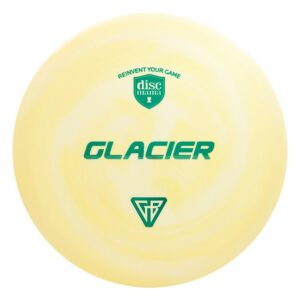
The fairway drivers in the archive, with flight numbers, stability and plastics — and a straight answer on whether you should be throwing one.
Is a fairway driver right for you?
Fairway drivers sit between the midrange and the distance driver, and for most players they are the most useful discs in the bag. Enough speed for real distance, narrow enough in the rim to actually control. If you are only going to learn one driver well, learn this one.
What it does
Distance you can aim
Speed 6 to 9 with a moderate rim. Fast enough to cover 250 to 350 feet for most players, shaped tightly enough to hold a line through gaps a distance driver would never fit through.
What it asks of you
A clean pull, not a big one
Far less arm speed than a distance driver, but it still rewards a smooth pull-through and a flat release. This is where most players find their genuine maximum usable distance — the number they can actually repeat on a course.
The common mistake
Skipping them entirely
Players jump from midrange straight to distance driver and lose the whole 250 to 350 foot shot shape. That gap is where most tee shots on most courses actually live.
Building a bag
Two fairway drivers — one stable, one understable — will cover more of a typical course than any distance driver in your bag. Start there and add speed later.
Hey there! You can ask me anything disc golf related. Need help choosing a disc for that tricky left-to-right fairway? Looking for a disc with similar flight numbers? Or maybe advice on tackling a headwind? Whatever it is, go ahead—ask me!
I’m here for all things disc golf—ask me anything.