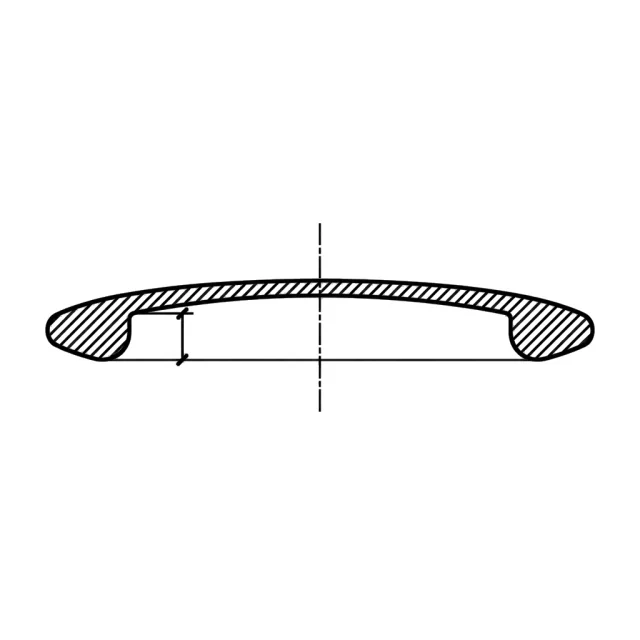
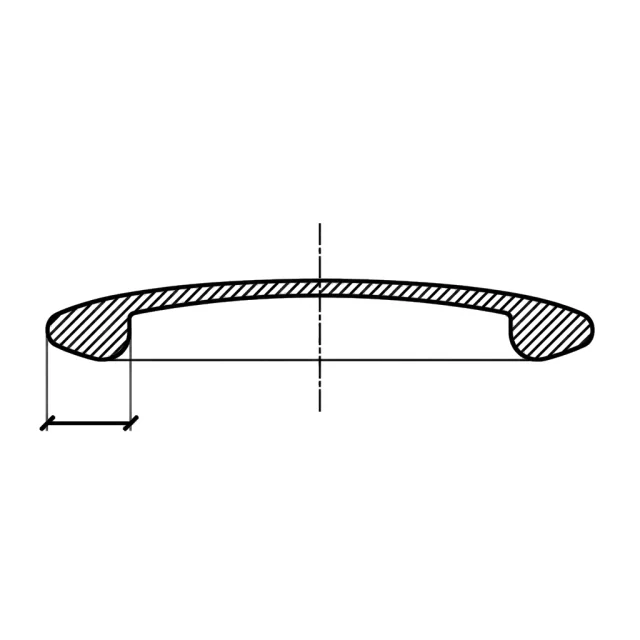
The RPM Piwakawaka is a slow, glidey, understable disc that RPM itself classes as a mid ranger. Rated 6 / 6 / -3 / 0, it has as much glide as speed and no fade at all — on paper it turns over and stays there.
How it is reported to fly is a long way from that. Infinite reviewer averages come back at 5.1 / 5.7 / -1.6 / 0.2 across more than forty ratings, roughly half the turn RPM publishes and a slower disc besides. RPM’s own description is milder than its numbers too: a reliable straight disc that holds a line and is sneaky long on glide. OTB goes further and calls it a hybrid between a putter and a midrange, a dead straight glidey approach disc with a low profile. The practical reading is that a moderate arm gets a straight, floaty flight rather than a hard turnover, and only a strong throw finds the full three turn.
That puts it in the straight-glide slot: touch approaches, tunnel shots, and easy turnovers, with rollers available if you throw it hard enough. With no fade there is nothing to bring it home, so it is not a wind disc.
The name is the pīwakawaka, the fantail — one of the few native birds to have adapted to New Zealand’s human-altered landscape, and now one of the most common and widely distributed on the mainland. RPM names its lineup for New Zealand native wildlife throughout. Approved by the PDGA in 2007, originally under the name Arcturus, it is one of RPM’s oldest molds and carries the widest plastic range in the lineup — Strata, Cosmic, Atomic, Magma and Glow — plus a limited Atua Series re-stamp sold as the Tane Mahuta.