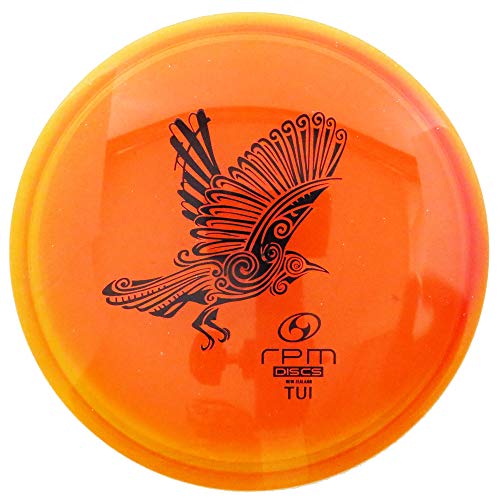
Placeholder image - no photograph of the RPM Tui yet
Flight path RHBH
RPM · Putt & Approach

Tui

Flight Numbers

3

Speed

4

Glide

-1

Turn

0

Fade

Buy the Tui
Affiliate links. Prices and stock change.
Amazon price and stock are as of the time shown and may change; the price on Amazon at checkout applies.
Share

About the Tui

Tui: RPM’s understable putt & approach

The RPM Tui is an understable putt and approach disc with almost no finish. One turn against a fade RPM publishes as half a point means it holds whatever angle you give it nearly to the ground.

RPM’s framing is that with a strong throw the Tui will hold a turnover and not fade back, which makes it a utility disc as much as a putter. Infinite reviewer averages of 3.1 / 4.2 / -1.1 / 0.2 confirm the turn and put the fade close to zero. Four glide is generous for the class and stretches an upshot further than 3 speed suggests. Lower-power throwers get a straight, easy flight; a strong arm gets a genuine turnover.

That puts it at the understable end of RPM’s three putters, with the Ruru as the stable middle and the Takapu as the overstable one. It works as a straight putter for players who fight a hard-fading disc, and as a turnover approach when the line bends right. There is nothing in it to bring the disc back, so a headwind will flip it and keep flipping it, and it will not hold a line across a crosswind.

The tūī is the honeyeater with the white tuft at its throat, found in native forest and bush across the three main islands, feeding mainly on nectar from kōwhai, pōhutukawa, rātā and flax, and acting as an important pollinator of native trees — often heard before it is seen. RPM names its lineup for New Zealand native wildlife throughout. Along with the Kiwi it is one of RPM’s two founding molds, PDGA approved back in 2006, and it carries one of the widest plastic ranges in the lineup: Strata, Cosmic, Atomic, Magma and Glow.


Flies like…

How much the Tui turns and fades depends on how hard it is thrown. These three shapes are drawn from the manufacturer’s numbers, not from measured throws.

BeginnerUnder 300 ft drive
Intermediate300-400 ft drive
AdvancedOver 400 ft drive

What the numbers mean

Speed3How fast it has to be thrown
Glide4How long it stays in the air
Turn-1Right at high speed
Fade0Left as it slows down

PDGA specs

Measured by the PDGA when the Tui was certified. Each card names discs that share the number, so you can feel it in the hand.

2006
First approvedAug 23, 2006When the PDGA first certified the mould for sanctioned play.Approved the same yearDiscraft Meteor·Discmania MD1·Innova TeeRex
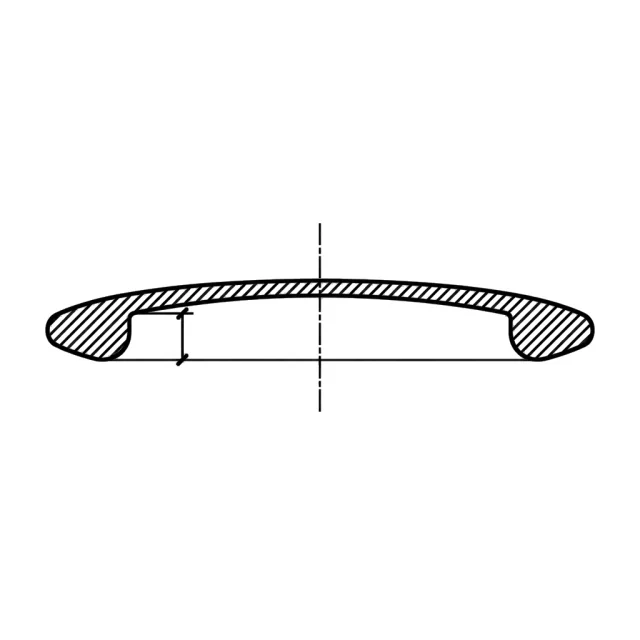
Section drawing of a disc golf disc with the rim depth dimensioned
Rim depth1.4cmFrom the bottom of the rim up to where the inner rim meets the flight plate — the pocket your fingers curl into. At least 1.1 cm.Same rim depthMVP Atom·Discmania MD3·Discmania MD1·Kastaplast Berg·Innova Archangel
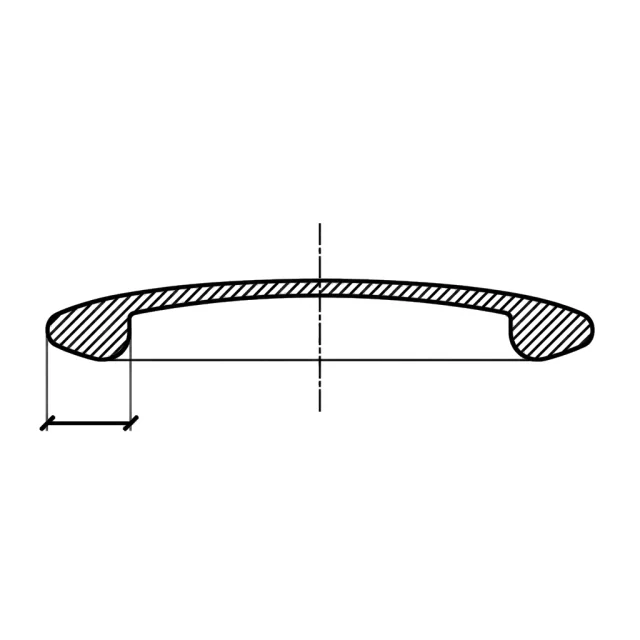
Section drawing of a disc golf disc with the rim width dimensioned
Rim width0.9cmOuter edge to inner edge of the rim (the PDGA calls it rim thickness). Wider rims generally mean faster discs. Capped at 2.6 cm.Same rim widthKastaplast Berg·Millennium Omega·Innova XD·Discraft Ringer·Innova Aviar

Available plastics

Speed · Glide · Turn · Fade

Discs with similar flight numbers

Dynamic DiscsDeputyUnderstable34-1.50
Westside DiscsSwanUnderstable33-10
AGLAcaciaStable3400
InnovaColtStable34-11
InnovaDartStable3400
DiscraftFierceUnderstable34-20
AGLPonderosaUnderstable34-20
InnovaXDStable34-11
AxiomProxyStable33-10.5
Clash DiscsCandyStable33-11
Same brand, same type

More RPM putters

RPMRuruStable3301
RPMTakapuStable2302